




As part of the FSR Blog’s ongoing interview series, we are pleased to publish this conversation with Grace Y. Kao. Kao discusses her book, My Body, Their Baby: A Progressive Christian Vision for Surrogacy, reflecting on surrogacy through feminist Christian ethics, reproductive hospitality, kinship, and communal care. The conversation then turns to the importance of scholarly communities such as the Asian Pacific American Religions Research Initiative (APARRI), especially for scholars working at the intersections of race, gender, religion, and Asian American studies. Kao concludes by considering emerging questions for feminist studies in religion, including disability and reproductive justice, artificial intelligence, ecological relationships, Indigenous sovereignty, and the enduring question of how feminist scholarship relates to feminist action.
On My Body, Their Baby and Writing from Embodied Experience
Interviewer (Samah) : Thank you, Dr. Kao, for joining me for this conversation. I have really enjoyed reading your book, My Body, Their Baby. I am also expecting at the moment, so reading it became an embodied experience for me as well. One of the things that struck me was the way you describe and analyze this deeply embodied experience of gestating through autoethnography, while bringing it into conversation with broader ethical questions. I would love to begin by talking about your process of writing the book. You give us the language of “reproductive hospitality,” and you explore it through four sources of moral wisdom: Scripture, tradition, reason, and experience. How did those things that might initially seem abstract come together in such a material way through the process of writing?
Grace Kao: First of all, thank you for interviewing me and for reading my book—and congratulations on your pregnancy! Before I launch into those four sources, though, let me say something about how I decided to write the book in the first place, because you are right that it very much had an experiential starting point.
I was visibly pregnant. I was forty at the time, and the pregnancy was unexpected for many of my peers. As I began showing, people would say, “Oh my gosh, I didn’t know you wanted another child.” And I would tell them, “Well, actually, thanks for the congratulations, but the baby is not for me. It’s for my friends.” People had all sorts of reactions. They asked questions. They raised concerns for me, and I would respond to them. My academic friends started saying, “Grace, you should write about this.”
It was never my intention to help my friends simply so I could get a book out of the experience! But through these conversations, I began to realize that I am a feminist Christian ethicist with direct, firsthand experience of a practice that is controversial and not particularly well understood. Maybe I could write about it. In fact, maybe I should, especially if I had an interest in furthering discourse about this controversial and often misunderstood practice.
As I went through the experience, reflected further upon it, and conducted research, the process also augmented my own understanding of what I was doing and what I had done. That is the origin story of the book. The next question was: if I were to write about this, what kind of book would I write?
The book certainly has memoiristic aspects, but I did not want it simply to be a memoir of Grace Kao’s experiences. I wanted to advance progressive Christian thinking about surrogacy. I wanted the book to be feminist. And I wanted it to speak to my religious tradition, particularly the Presbyterian Church, because the church had already done some thinking about queer couples and children, IVF, and adoption, but there was still a large question mark around practices such as surrogacy. Knowing that I wanted to reach a particular audience influenced how I structured the book.
The idea of thinking through Scripture, tradition, reason, and experience is quite standard within Christian theology and Christian ethics. People will differ in how they use those sources and which ones they consider more authoritative, but it is not particularly controversial to say that Christian ethics needs to engage, in some way, these four sources of moral wisdom. That is what I ultimately do in the book. From those sources, I develop themes including reproductive solidarity and reproductive hospitality.
Surrogacy, Birth, and the Material Practice of Hospitality
Interviewer (Samah): That is really helpful. Your writing style is so engaging. There were moments when I laughed, and there were also moments when my heart was quivering. One of those moments is your description of the delivery. Something that has existed intellectually or conceptually suddenly becomes material in that moment when you are trying to communicate: “Give the baby to my friend.”
Grace Kao: Yes.
Interviewer (Samah): I really felt that moment.
Grace Kao: Thank you. The friend I call “Katie” in the book was there. At first, I just could not get the words out, I was stuttering and that’s not really something I do. Later, she asked me what had been going on. I told her that it was so important to me that the doctor get this right. It was one of those things you cannot do over. If the baby came first to me and not to her, I was concerned about how that might affect her. She was already nervous about whether she would be able to bond with this child whom she had not carried, but I, her friend, had carried. She had already experienced the trauma of infertility. So I needed that part to go well. For whatever reason, in that moment, I was having trouble saying it. But I was completely present to what was happening and to how important it was.
Interviewer (Samah): Hearing you talk about it now makes me think about all of the other material constraints that you could not control. You describe, for example, that only two people were allowed in the delivery room.
Grace Kao: Yes.
Interviewer (Samah): So Katie’s partner had to wait outside,
Grace Kao: Exactly.
Interviewer: and was experiencing this on the other side of a wall. It underscores how important it becomes to act intentionally in those moments when you can. If you simply allowed the usual process to unfold
Grace Kao: The baby would have come to me first.
Interviewer (Samah): Right.
Grace Kao: Exactly.
Rethinking Kinship, Family, and “Third-Party” Reproduction
Interviewer (Samah): My next question is about surrogacy and something related to what we have just been discussing: the idea that the care and raising of children is communal and not something that should necessarily happen in isolation within what we now call the nuclear family. There are many assumptions—not only within religious traditions but deeply ingrained within broader cultures—that tell us what the definition of a family is supposed to be. Feminist and queer studies have asked us for a long time to reconsider those assumptions. How does your book encourage religious studies in particular to redefine not only general concepts such as kinship and family, but also theological understandings and practices of kinship and family?
Grace Kao: Let me begin with ethics and then move into theology.
In reproductive ethics, one concern is what is called “third-party reproduction.” This happens when another party is involved beyond the genetic mother and genetic father in producing a child. There can be an assumption that this third party is somehow invasive—that the third party might intervene in ways that disrupt the unity of the first two parties. Already, then, this connects to what you were saying about the nuclear family: the third party is imagined as someone outside of that structure. But I am Taiwanese, and there is a saying in Mandarin—I am forgetting exactly how to say it—that translates into something like “the joy of three generations under one roof” sān dài tóng táng (三代同堂). Historically and globally, it simply is not the case that children have always been raised only by a mother and father.
And, as you mentioned, we are now also talking about queer families and queer kinships. Queer partnerships are not necessarily organized according to the model of one man and one woman.
Then, if I bring this into a Christian theological context, in the book I discuss baptismal vows. When children are baptized, the whole church covenants—or participates in a vow—to help raise that child in a particular way. Others have written about the tradition of godparents, who are not necessarily family through blood or marriage. They may instead be people beloved by the parents who also take on responsibilities toward the child.
All of this is to say that we already have cultural and religious practices that can affirm people who take on parenting roles beyond the biological mother and biological father. In that sense, I do not have to invent or construct this idea out of whole cloth: I can point religious studies and theology toward relationships that already exist. We all know, for example, that there are mothers-in-law and “other mothers.” We have maternal figures. Sometimes they are perceived as meddling; sometimes they are regarded as enormously helpful. We might call someone a “bonus mom.” But if everyone understands their role and acts in the best interests of the child, having people beyond the biological mother and father involved in that child’s life can be to the child’s benefit rather than their detriment.
Interviewer (Samah): And having that information available early seems important too, so that this is simply the world in which the child grows up rather than a concept that suddenly has to be introduced later.
Grace Kao: That is right. We have actually learned a great deal about this from adoption literature. Once upon a time, adoption was predominantly closed, and people believed that this was in the best interests of both parents and children. There were concerns about “illegitimacy”, inheritance, crisis pregnancies, and many other things. The assumption was essentially that keeping the secret forever was good for everyone involved. We have learned that it is not.
For a variety of reasons, secrecy is not necessarily beneficial to everyone. We have undergone a generational shift from a time when most adoptions were closed to one in which adoption agencies increasingly encourage open adoption and early disclosure where ideally, the fact that someone was adopted is never registered as “news.” It is learned in the same way a child learns, “This is the color red. This is the color blue. These are my toys. This is my brother.” It is simply part of the world they have always known. We see something similar with donor-conceived children, when either the egg or sperm does not come from one of the parents raising them. That, too, was once treated as a secret that ideally would be taken to the grave.
Now, with recreational DNA testing, you can pay a relatively small amount of money and all sorts of family secrets can come out about ancestry and biological relatedness. Increasingly, donor-conceived children themselves are saying that they have a right to know. So, if you are surrogate-conceived or donor-conceived, and everyone knows that from the beginning and the adults surrounding you are comfortable discussing it, there does not have to be psychological damage attached to that knowledge.
One of the reasons people have historically been reluctant to disclose, especially in heterosexual contexts, is that there remains shame and stigma surrounding infertility. In queer families, everyone already knows that some form of third-party reproductive assistance was likely necessary. We do not currently have technology through which two biological men or two biological women could together produce a child genetically related to them both—perhaps reproductive technologies will change in the future. But in what we might call the heterosexual case, turning to third-party reproduction frequently happens because there is some reproductive difficulty. And there can still be shame or stigma attached to that difficulty. In the queer case, there is no comparable “problem.” The third party is simply necessary.
Interviewer (Samah): It seems that openness can level the playing field among the people involved. When the information is shared from the beginning, it does not have to become a later intervention or surprise. It is simply part of enacting the kind of familial world you want to create.
Grace Kao: That is right.
About the Interviewee, Grace Y. Kao is Professor of Ethics and the inaugural Sano Professor of Pacific and Asian American Theology at Claremont School of Theology. She is the author or co-editor of four books, including an anthology entitled Encountering the Sacred: Feminist Reflections on Women’s Lives (T&T Clark, 2018) and her most recent publication, My Body, Their Baby: A Progressive Vision for Surrogacy (Stanford UP, 2023) which was named Outstanding Academic Title by the American Library Association and the silver medal in theology by the Illumination Book Awards.
An active member of the guild, Dr. Kao is Associate Editor of the Journal of Religious Ethics and a managing board member of the Asian Pacific American Religions Research Initiative (APARRI). She also rendered service on the board of the Society of Christian Ethics (SCE, 2010-2014) and the Pacific, Asian, and North American Women in Theology and Ministry (PANAAWTM, 2014-2024). You can learn more about her at drgracekao.com.
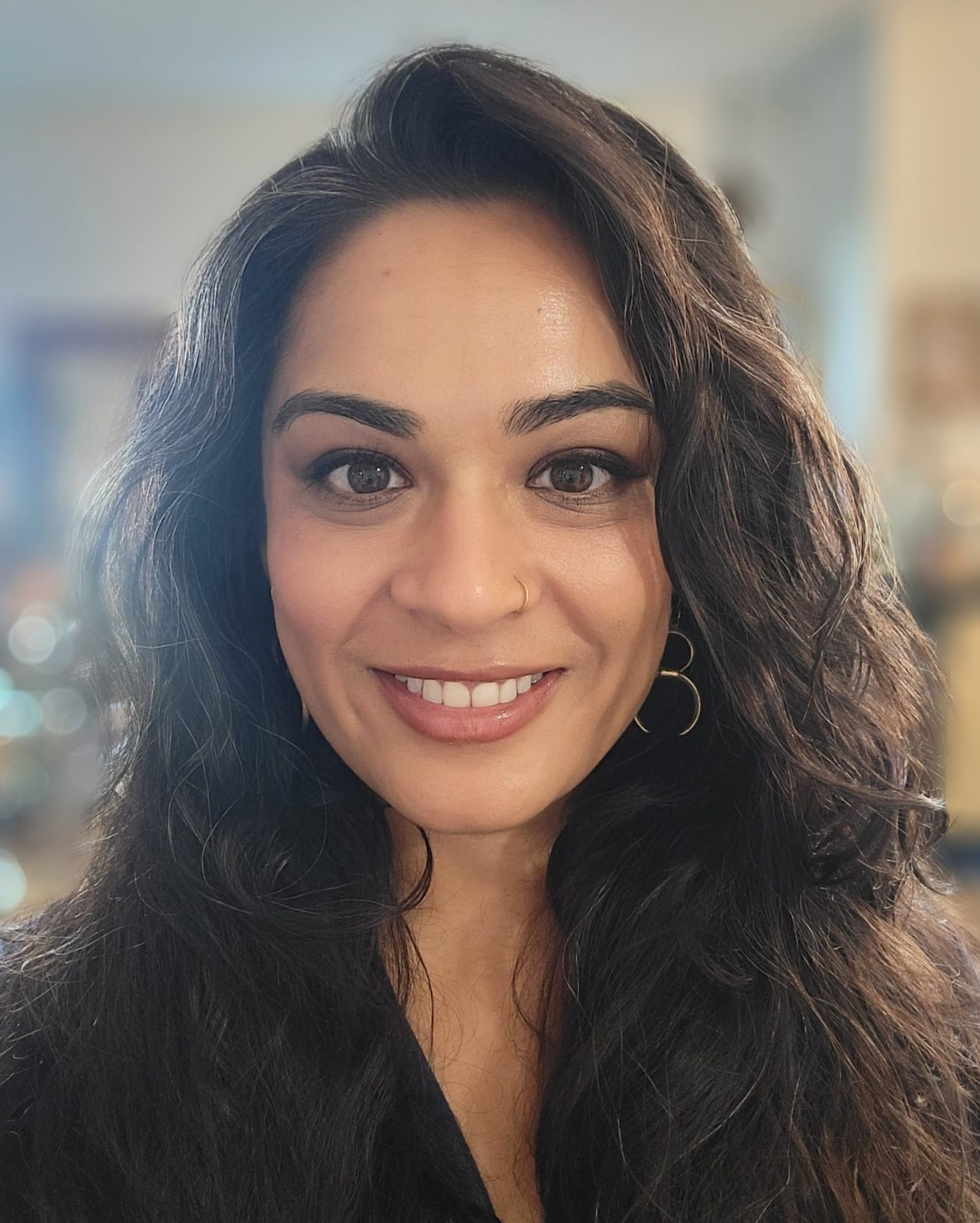
About the Interviewer, Samah Choudhury is an Assistant Professor of Contemporary Islam in the Americas in the Department of Religious Studies at DePaul University. Her research and teaching surround issues of religion, race, gender, and popular culture in the U.S. and around the world. Prior to joining DePaul, Samah was a postdoctoral researcher at the University of Chicago and taught at the Illinois Institute of Technology and Ithaca College. She received her B.A. in Political Science and Middle Eastern Studies from the University of Michigan in Ann Arbor before completing an A.M. in Middle Eastern Studies at Harvard University. In 2020, she earned Ph.D. in Islamic Studies from UNC Chapel Hill. Samah is at work on her first book, Standup Citizen: American Muslim and the Politics of Secularity, which is under advance contract with the University of Chicago Press’s Class 200 series. Her scholarship has been supported by the Center for Black, Brown, and Queer Studies, the Asian American Religions Research Initiative, the Center for Islam in the Contemporary World, the UNC Chapel Hill Asian American Center, the Institute for Social Policy and Understanding, and the Pauli Murray Center for History and Social Justice, among others. Samah serves as co-chair of the Study of Islam Unit at the American Academy of Religion, and is a member of the AAR’s steering committees for the Men, Masculinities, and Religion Unit and the American Lecture in the History of Religions. She also engages in public scholarship through podcast interviews, public lectures, and other online venues.
Watch the conversation with Grace Y. Kao on YouTube: https://youtu.be/hLdn3uRTJ9o