



Sexual Violence and Sacred Texts
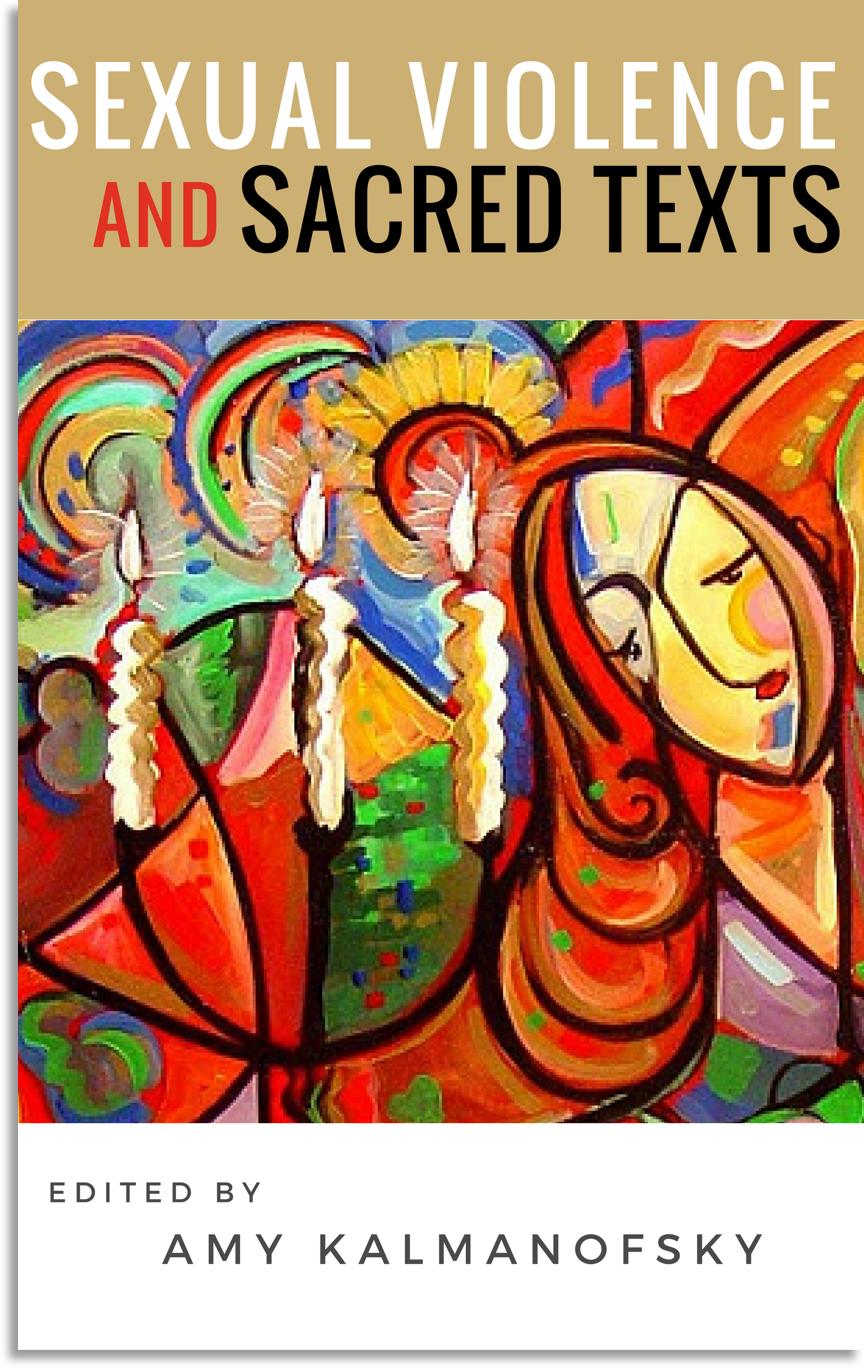

As of October 2020, Sexual Violence and Sacred Texts was republished with Wipf and Stock and is available for purchase through their website.
At the heart of many religions are sacred texts that depict or even incite sexual violence. Most is directed against women. Speaking from a variety of faith traditions, feminist scholars ask whether or not such texts can be interpreted in a manner that promotes healing from sexual violence and abuse. Sexual Violence and Sacred Texts provides an informed and passionate, interfaith dialogue for scholars seeking to engage current social issues and the impact of religion on women and girls globally. The resulting scholarship empowers women and religious leaders to confront sacred texts that re-inscribe sexual violence and to promote gender equity for the flourishing of spiritual lives.
Editors:
Illustrators:
Cover Artists:
"Just as sexual violence is prevalent in ancient sacred texts, sexual violence is prevalent in contemporary society. If the statistics are right that about one in seven women have been sexually violated, those of us who are academics are more than likely teaching students who have directly experienced sexual violence.1 The recent attention to rape on college campuses makes this even clearer. We owe it to our students at least to acknowledge if not to consider how they may be experiencing our “academic” discussion of these disturbing texts; in fact, it would be irresponsible not to. Before teaching a unit on rape texts in the Hebrew Bible, I introduce the topic a week in advance and admit that this may be a personally difficult, religiously challenging, but important topic for students to discuss.
READ MOREStudents have expressed appreciation for my introduction, often taking the opportunity to talk with me further about their personal experiences and reactions. Of course students will encounter rape scenes in secular literature as well, and I do not think it is always necessary to prepare students before they encounter difficult or upsetting material. Yet, because the material I teach is considered by most of my students to be sacred, and many are redefining their relationship to the material, I assume the Bible’s rape texts will evoke a deeply personal response, and I feel responsible for guiding them emotionally through the experience of studying these texts. I contend that we, as scholars of sacred texts, regardless of our own religious orientations, have an added responsibility to consider the effect that texts that portray or even condone sexual violence have on our students. Though some may be beginning their paths to become scholars of the Hebrew Bible, the New Testament, the Talmud, or the Qur’an, most of our students are not being trained for the academy. For example, I teach at a Jewish seminary that educates and trains rabbis and that offers undergraduate and graduate programs..."
COLLAPSEJudith Plaskow wrote:"Readers will find in this book suggestions of how to make sense in the face of violent religious texts and to craft for themselves ways of bringing healing to themselves, and to the victimized so they can have a voice."
Mercy Amba Oduyoye, Women in Religion and Culture Institute,
Trinity Theological Seminary, Legon, Accra, Ghana
Wil Gafney wrote:"This highly readable and insightful collection accomplishes several things at once: it lift s up the reality of gender-based violence in Jewish, Christi an, and Muslim Scriptures in ways that illuminate the roots of violence in our own ti me; it offers numerous concrete strategies for using painful texts as tools for healing and liberation; and it offers a variety of terrific models for thinking through how to deal with the hard places in Scripture."
Judith Plaskow, Professor Emerita of Religious Studies at Manhatt an College
"Sexual Violence and Sacred Texts takes an unflinching look at violence in religious texts from the perspective of women who are scholars of and participants in the traditions in which the texts are venerated. What emerges is a series of deep, faithful, brutally honest engagements with the scriptures of Judaism, Christianity and Islam."
Wil Gafney, Episcopal priest and
Associate Professor of Hebrew Bible, Brite Divinity School
Amy Kalmanofsky is Associate Professor of Bible at The Jewish Theological Seminary. Her first book, Terror All Around: The Rhetoric of Horror in the Book of Jeremiah (2008), used horror theory to examine the ways the Bible works to terrify its audience. Her most recent book, The Dangerous Sisters of the Hebrew Bible (2014), explores the biblical portrayal of sisters and sisterhoods and argues that both play a vital, though destabilizing, role in the Bible’s narratives. Rabbi Dr. Kalmanofsky earned a PhD from The Jewish Theological Seminary.