



Reproductive Hospitality, Scholarly Community, and Feminist Futures: A Conversation with Grace Yia-Hei Kao. Part II.

APARRI and the Importance of Scholarly Community
Interviewer (Samah): I want to shift gears a little.
You and I previously met through APARRI, the Asian Pacific American Religions Research Initiative. You have moved through the organization and taken on leadership roles within it. I wonder if we could talk about organizations such as APARRI and the gaps they are trying to fill. How are groups like APARRI bringing together the study of religion and gender with Asian American experiences in particular? Why does an organization like this continue to be so critical, especially at a moment when higher education is increasingly shrinking what we even consider to constitute religious studies?
Grace Kao: Those are really good and important questions. I would connect APARRI’s importance to APARRI’s origins. How was APARRI founded? It was founded by people interested in studying ethnic communities—specifically Asian American ethnic communities—and their religious practices. There were sociologists, historians, and scholars from other disciplines who found themselves at a loss when trying to identify other people who shared similar interests. So they came together for mutual support and networking.
Over the years, organizations such as APARRI or PANAAWTM—the Pacific, Asian, and North American Asian Women in Theology and Ministry—have continued meeting because scholarship can be lonely. It can be difficult to find people willing to read your work, become interested in your work, and help you develop your ideas. That is one of the reasons these scholarly networks initially formed, and it is one of the reasons they continue.
In the current climate, you are absolutely right that standalone religious studies departments are being cut. This is not only a religious studies issue; it is a broader humanities issue, and there are many factors behind the financial pressures institutions are experiencing. But to the extent that APARRI as an organization continues to meet the needs of its members, it will continue to be important. And what are those needs? Members need funding to carry out their projects. I do not mean that hierarchy disappears. We generally know where people are in their careers. But we really try to cultivate an environment in which everyone participates. There is an informal culture of peer mentoring. Even within this niche scholarly world, it can still be the case that several people are applying for the same job. That can create tricky dynamics.
I would say something similar about PANAAWTM. The ethos there is shaped partly by the recognition that, too often, institutions approach diversity as though there were a single slot: perhaps they want an Asian American woman theologian, and they are only going to hire one. We are often placed in competitive environments. But within these organizations, we try not to buy completely into that logic. Yes, there may be competition. But we are still going to do what we can to support one another and lift one another up. That is something you can find at smaller conferences. This is not to say that people coming through the field should attend only small conferences. You also want the AAR and other large professional organizations. But at a smaller conference, you can build substantive relationships. Those relationships can then carry you through as you navigate enormous conferences with thousands of attendees.
Interviewer (Samah): I agree completely. The relationships you build at a place like APARRI carry over into the larger conferences and make those experiences better too.
Grace Kao: Exactly.
Interviewer(Samah): You end up getting much more out of the AAR because of the groundwork that APARRI has already laid. This work can be very lonely. Sometimes you feel as though you are the only person interested in a particular constellation of questions—in my case, masculinity, race and ethnicity, and Islam. But then I went to APARRI and met four or five other people working at almost exactly that same intersection. And, as you said, it never felt competitive in that way, even while recognizing the reality that there are only so many jobs available. There is something deliberate about cultivating an environment of collaboration and generosity. There can be thousands of scholars working on an established figure or subject without feeling that another scholar is “infringing” on their territory. But when there are only five people studying something, suddenly it can feel as though we are supposed to compete with one another.
Grace Kao: Exactly.
Interviewer (Samah): APARRI sidesteps that assumption, and I have always appreciated that.
Grace Kao: I am really glad to hear that.
Emerging Frontiers in Feminist Studies in Religion
Interviewer (Samah): As we begin to wrap up, I want to bring us back explicitly to feminist studies in religion. As you look ahead in the field, what do you see as some of the most urgent—and perhaps also the most promising—new frontiers for feminist studies in religion?
Grace Kao: I have been very interested in what some feminists are doing with disability studies. I think that is a really important frontier. I have also been in conversation with a colleague through something called reproductive justice futurisms. We are trying to take the reproductive justice framework that emerged in the 1990s and ask: if we look fifty or one hundred years into the future, what are going to be the major challenges? Eugenics is and remains a significant concern. For example, there are eugenicist concerns among disability scholars about prenatal testing and preimplantation genetic diagnosis because those technologies can potentially be put toward eugenic ends. At the same time, there are feminist commitments to ensuring that people have the ability to make fully informed choices about whether to carry a pregnancy to term.
I am interested in how we are going to navigate that tension. That is one major area. I also continue to be interested in the question of the human. With the rise of artificial intelligence, for example: What is human intelligence, and why is it special? That then takes us into questions about humanity’s relationship with the rest of the natural world. I have done some ecofeminist work, and there are important questions surrounding human-animal relationships.So I do not think I have only one frontier in mind. The intersection between feminist studies and disability studies is one. Reproductive justice is another. Questions about the human and the nonhuman are another.And then there are the continuing questions of restorative justice and reparations. What do we actually do with our postcolonial critiques? I see this increasingly in relation to First Nations and Indigenous peoples. Hawai‘i is a particularly interesting case. Asian Americans, in a number of cases—including instances involving public apologies—have found themselves on the side of systems that oppressed Indigenous peoples rather than standing with Indigenous communities. I am very interested in what it would mean materially for feminist, postcolonial, and pro-Indigenous commitments to come together. What would that actually look like in practice? Will we ever arrive at some form of agreement about what justice requires? I do not have a crystal ball, but those are some of the questions I continue thinking about.
What Does This Moment Require?
Interviewer (Samah): Do you find that these are also questions your students are asking?
Grace Kao: They are. My students are, of course, all over the place. Some are asking very practical questions: “Will I have a job? Will I ever be able to pay off my loans?” Those are real existential questions. They are very important questions. But intellectually and vocationally, I also hear students asking questions that have been part of feminism from the beginning.
There are moments when people ask: What are we doing? Why are we in a classroom? Should we be protesting? Should we be spending all of our time participating in mutual aid efforts?
In this particular historical moment, when ICE is kidnapping people, those questions become especially urgent. And in some ways this has always been part of the question, “What is feminism?” We have feminist thought. We have feminist theory. We have feminist theology. But what ultimately is feminism? Is it a movement intended to bring about a different world?
And, if that is the case, is scholarship the best place for me to be? Different people are going to arrive at different answers to that question. Not everyone needs to be on the front lines. Not everyone needs to be standing in front of a megaphone. Some people are actually better suited to the classroom. But yes, I see students asking these kinds of questions. They are partly vocational questions, but they are also questions about what this particular moment requires of us.
Interviewer (Samah): Right. And perhaps our surrounding circumstances are hastening the need to arrive at different answers.
Grace Kao: Yes. That is right.
Interviewer (Samah): I think that is a wonderful place to leave our conversation. Thank you again, Dr. Kao. This has been such a rich conversation.
Grace Kao: Thank you.
Watch the conversation with Grace Y. Kao on YouTube: https://youtu.be/wBCBzs4ddOo
About the Interviewee, Grace Y. Kao is Professor of Ethics and the inaugural Sano Professor of Pacific and Asian American Theology at Claremont School of Theology. She is the author or co-editor of four books, including an anthology entitled Encountering the Sacred: Feminist Reflections on Women’s Lives (T&T Clark, 2018) and her most recent publication, My Body, Their Baby: A Progressive Vision for Surrogacy (Stanford UP, 2023) which was named Outstanding Academic Title by the American Library Association and the silver medal in theology by the Illumination Book Awards.
An active member of the guild, Dr. Kao is Associate Editor of the Journal of Religious Ethics and a managing board member of the Asian Pacific American Religions Research Initiative (APARRI). She also rendered service on the board of the Society of Christian Ethics (SCE, 2010-2014) and the Pacific, Asian, and North American Women in Theology and Ministry (PANAAWTM, 2014-2024). You can learn more about her at drgracekao.com.
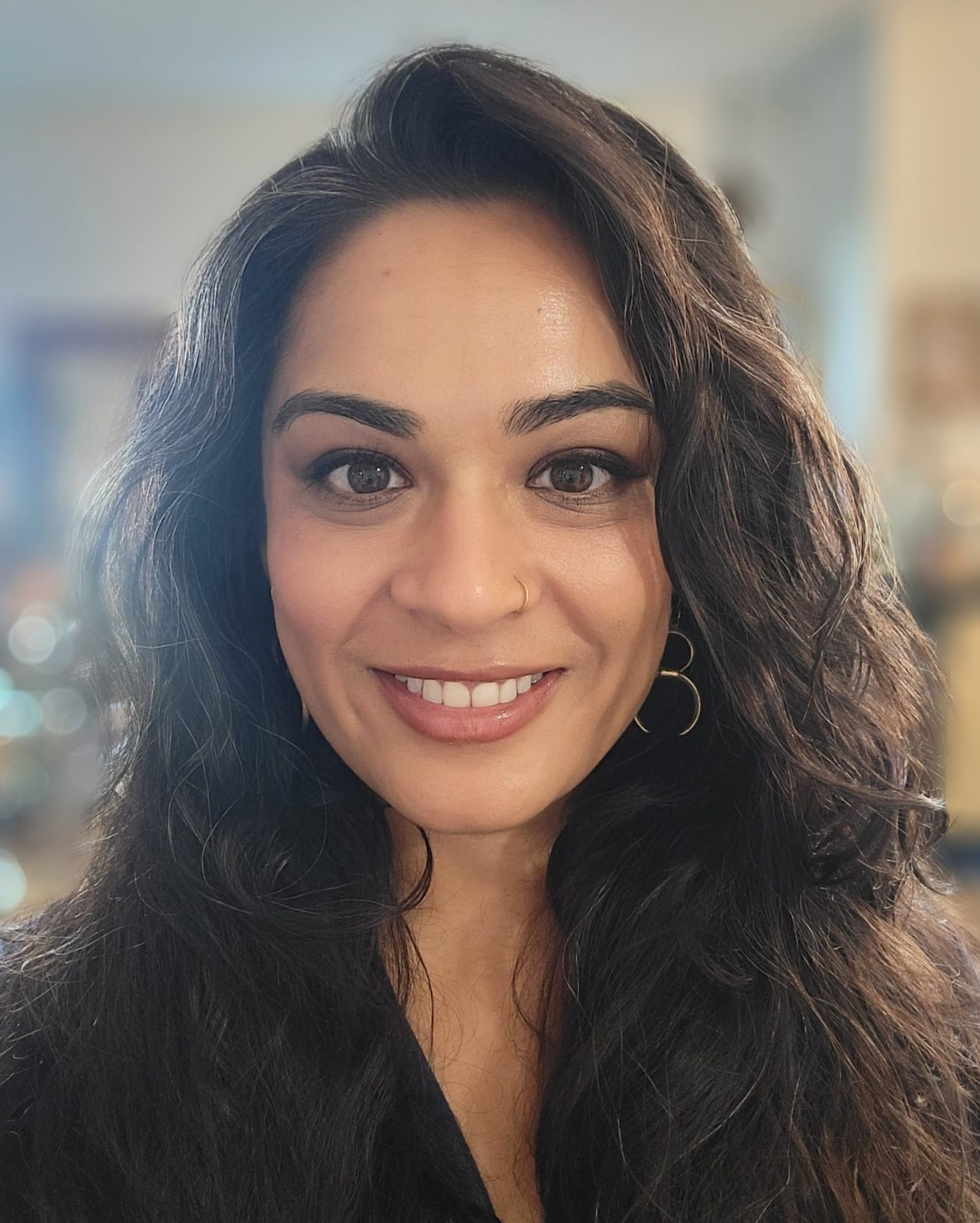
About the Interviewer, Samah Choudhury is an Assistant Professor of Contemporary Islam in the Americas in the Department of Religious Studies at DePaul University. Her research and teaching surround issues of religion, race, gender, and popular culture in the U.S. and around the world. Prior to joining DePaul, Samah was a postdoctoral researcher at the University of Chicago and taught at the Illinois Institute of Technology and Ithaca College. She received her B.A. in Political Science and Middle Eastern Studies from the University of Michigan in Ann Arbor before completing an A.M. in Middle Eastern Studies at Harvard University. In 2020, she earned Ph.D. in Islamic Studies from UNC Chapel Hill. Samah is at work on her first book, Standup Citizen: American Muslim and the Politics of Secularity, which is under advance contract with the University of Chicago Press’s Class 200 series. Her scholarship has been supported by the Center for Black, Brown, and Queer Studies, the Asian American Religions Research Initiative, the Center for Islam in the Contemporary World, the UNC Chapel Hill Asian American Center, the Institute for Social Policy and Understanding, and the Pauli Murray Center for History and Social Justice, among others. Samah serves as co-chair of the Study of Islam Unit at the American Academy of Religion, and is a member of the AAR’s steering committees for the Men, Masculinities, and Religion Unit and the American Lecture in the History of Religions. She also engages in public scholarship through podcast interviews, public lectures, and other online venues.