



Feminist Foremothers and Overlooked Histories: Intellectual Lineages and the Politics of Knowledge, Part Two.
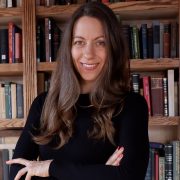
How do feminist thinkers unsettle the boundaries of disciplines, identities, and historical narratives? And what happens when scholars return to feminist intellectual lineages with renewed attention to the conditions in which their ideas emerged?
In the second installment of this conversation, Jessica Knippel and Dr. Kimberly George discuss Gloria Anzaldúa, Pauli Murray, Leila Ahmed, Barbara Christian, Barbara Smith, and other feminist thinkers whose writing expands how we understand knowledge and its histories. Their exchange considers Black feminism, Chicana feminism, the limits of U.S.-centered scholarship, and the imaginative possibilities of recovering intellectual connections across borders.
This interview has been edited and condensed for length and clarity.
Feminist lineages across disciplines
Kimberly George: I think that this question is important of how to do transdisciplinary studies, not just interdisciplinary, but transdisciplinary and how to write with different lineages coming together and how chaotic and overwhelming that can feel. It is something I’m putting more front and center in my research and my writing because people who created significant change historically did do that work of bridging knowledge across communities, fields, disciplines, whatever the borders and boundaries were. It’s that creativity of how to bring different ideas together. So, I want to be able to teach graduate students some models for how to do it because I don’t really think we get that.
Jessica Knippel: No, very rarely. Who are some of the people that you are most excited to teach about doing that work?
Kimberly George: Well, I am really obsessed with Gloria Anzaldúa, as people know. She’s going to be the starting place, just the multiplicity in her work, spiritual multiplicity, racial, gender, what I would call neurodivergent and disability, though she doesn’t use that word to describe herself. She said other people could. She just became really cautious about identity labels in the 1990s and didn’t want more stacked upon her. She felt them to be very homogenizing and restricting. But she’s okay if you all want to use the word disability to describe her lived experience. So, there are many different intersections in her work and just many different ways of deconstructing borders and binaries. I am starting with her and then moving to Black feminism, Reverend Pauli Murray’s work on multiplicity. And then Leila Ahmed, who is a scholar of Muslim women’s histories and activism will be in the course. There’s a lot of readings, but that’s just an example of three. It’s a class that wants to connect both racial and religious multiplicity. But it’s also how we use our own writing about personal experience to develop methods in our work. So, what’s the connection, since experience isn’t transparent? How do we take the writing about personal experience into historical or theoretical methods?
Writing, memory, and foremothers
Jessica Knippel: Yes. It’s hard, and I think that’s why you and I both tend to use pieces like “The Combahee River Collective Statement.” I tend to combine that with Zoe Leonard’s “I Want a President” piece, because I think both of them have that kind of dynamic space for somebody to gently, or not so gently, reconcile positionality. I see you often doing this in your work: inviting people to think about positionality, not just socio, or cognitive, or racial, or gender, but really from the somatic difference, as well. You’re inviting these layers of the onion that is you to engage, because it’s never just us with thoughts, it’s always us and the stories we’ve been told, and the stories we’re breaking. It’s not… we’re not Kantian in how we approach things, even if we were trained as Kantians.
Kimberly George: I’m really trying to figure something out, and I’m doing this through writing the book I’m writing on writing practices, and reading writers like Anzaldúa, and Barbara Smith (who’s one of the co-writers of The Combahee River Collective Statement). I am trying to attend to the psyche— like what’s happening in the psyche as they write, and that attentiveness they practice to their own awareness of their psyche.
Kimberly George: It is like close reading a text or close reading a historical archive, actually. It’s that but in their own psyche, where there’s all the systems, including the family systems. And if you can read that about yourself as you write and as you read, it’s a profound source of knowledge, and I think it goes under-theorized in academia. It’s something that’s really important to do.
Kimberly George: It obviously shapes what we’re doing, and we can talk in a manner where it seems very disconnected from childhood, but we are enacting childhood. Also, I see in the texts I study explicitly that children have a lot of knowledge inside of them. The child inside of us has a lot of knowledge. It’s not just about trauma or pain or shame or exclusion. It’s about knowledge. Can we tap into what the child in us knew, and why we need and desire to bring those questions into our work? When I teach Leila Ahmed’s A Border Passage, which is her amazing 1999 memoir, we think about these questions. She was the 1st professor of religion and I believe gender studies or women’s studies at Harvard. Her child self in that memoir knows more than her adult self, and the process is trying to get the adult self connected to the child self to sort of transmit that knowledge to the adult narrator. And, there’s a lot of affect in between that blocks that reconnection. Because, as the memoir shows, there’s lot of pain and a lot of grief in the way of reconnection. Often, we have to go through the grief to access the knowledge that our childhood self knew.
Kimberly George: I mean, it’s interesting, Jessi, because to us, we do assume a certain point of entry in this conversation, right? But in most spaces in academia, it’s like, why would we think about what we knew as a child to develop a historical method? But that is actually the argument that I make at various points in my book that you knew something as a child, and there’s been change over time, and if you can go back and think about that, you probably do have a historical method. And I mean it.
Kimberly George: In Ahmed’s book that I was just citing, she comes up with a different way to study Egyptian history that had not been done by historians, and it was extremely important, and is now being taught in lots of departments, including by historians. A historian didn’t come up with it; she came up with it. I mean these conversations between fields and methods and methodologies are obviously intense when you’re training, and also when you’re working in your field after grad school. But this psyche, your own psyche and your own childhood experiences, it’s like that’s the instrument inside of you. So why not get a little bit more intimate with knowing what’s in your psyche? Also, I just think so much of writing and theorizing and knowledge making is a struggle for belonging.
Rethinking intersectionality and the history of categories
Jessica Knippel: How does intersectional feminist studies help here, which is the way I always describe you to people, that she is not just a feminist studies scholar, she’s an intersectional feminist studies scholar, because I think that matters. Your sensitivity towards power dynamics. Those spaces are, I think, a lot of the ways that feminists, especially the feminists that you and I both tend to gravitate towards, are inviting people into this sense of awareness. So that you’re not doing harm, so that you’re not recapitulating structures of power, and you’re really seeking a space where all can be free and unbound by these power dynamics.
Kimberly George: Yeah, I feel like my brain is in the midst of being reformed, reshaped right now. So, it’s actually kind of hard to pin where I am. But I’ll say what I’m exploring with this. I’m deeply trained in Black feminism. That training was very important to me, and I’m very grateful from all my mentors. But I also study feminism across a lot of other lineages, and each lineage has a different kind of way to think about identity. And so, if we think about, you know, Crenshaw’s work in the law, in legal studies, and what she was doing, the intervention she was making around categories of identity and access to material resources and who’s made invisible in the law.
Kimberly George: It is and isn’t about identity. It’s both. It’s about structures.
Kimberly George: There’s other lineages, and here it’s like Anzaldúa or aspects of Chicana feminism that might ask us to rethink the categories themselves, the identity categories themselves, and how located they are in a U.S. context and racial logic that does not translate in other spaces or experiences, which isn’t a discounting of the impacts of racism or sexism, homophobia or classism at all. It’s just a different way of narrating those conditions. And, so, where I’m going with this is? I am thinking about the multiplicity within any one word and moving towards that and asking my students to do that. So, one of the points of research in my book is thinking about the emergence of the category of “women of color”—as a political category, as an analytic in the United States in the early 1980s. And the history is actually quite different than most people would think. It wasn’t based on what you looked like. It’s a different discourse than today. And I am just trying to think anew about something that we assume we know what this is. What is women of color feminism? Who was excluded and why?
Kimberly George: How are the decisions made about who was included and excluded? I think about being a woman of color in terms of the racialized labor that women of color bear every day in a society that is a white supremacist still in so many of its structures, whether it’s police, or medical spaces or political, or economic. But how I am thinking about this is actually a different formation of the term women of color in these earlier texts, and I just have to think, OK, what was this category to them? Because as soon as we put a category on something, it’s really easy to divorce it from a historical moment and what created the category in the first place. And, so this, for me, comes from Anzaldúa’s work. On the one hand, she felt as though labels could be lifesaving.
Kimberly George: But they also homogenize, and they also fragment us. They make us cut off aspects of who we are to fit into the label to have belonging. I’m trying to write in these different locations, disciplinary locations, and figure out what I arrive at. And, yes a theory built to analyze the law is different from a theory built to analyze the psyche of an artist, which is what Anzaldúa was doing. Both of them, Crenshaw and Anzaldúa are grounded in a critique of the material and the historical.
Jessica Knippel: I think that’s the issue of being transdisciplinary, right? Is that you don’t know what you don’t know until you get into digging into that new field. You think you’re working with what you can gather in your best practices, until you come up against a specialist in that field, and then they can help you re-imagine what you’ve already been working with and toward and the language that community is utilizing in their work. And then how do you marry that with the work you’re already doing?
Whose scholarship travels across borders?
Kimberly George: Yeah, and how to give equal weight to different voices. I mean, there’s a lot of current critiques of Anzaldúa’s work that are located in the United States. But often they are not close reading her, or not actually reading her. They are proof texting her and then tearing her apart, and in that is a disrespect for her position as a working-class queer Chicana woman.
Kimberly George: I think about the politics of location and disciplinary lineage. So Anzaldúa is talking about a location of racial politics that’s very different from how we often frame it in the United States or in academic departments in the United States. That doesn’t make it any way less valid. In fact, we might want to pay attention to what she’s narrating about 1940 South Texas racial politics. It might actually give us some information about what we’re experiencing today. And I finally realized, often U.S. academics are not in discussion with academics in Mexico. The very border she theorizes in her work is the problem with interpretive practices in her work: We’re divided by this border and books are not getting translated.
Jessica Knippel: Right. Oh, yeah. I mean, there’s so much in some of my research areas where there has been critical work done in the Caribbean or in South America that isn’t translated and so we’re not coming across these works that have been asking these questions because they’re in Spanish or French or Portuguese.
Kimberly George: And I have more recently lived in Europe for almost a year, which was really helpful, but I am so trained by U.S. academia. And that is not the world.
Jessica Knippel: And so, unless we’re seeking out other scholarship internationally, we’re missing huge pockets of very critical scholarship that can transform what we’re doing.
Kimberly George: And also seeking out and advocating for material and financial redistribution to support scholars and places where they wouldn’t be able to do it. Basically, we have a lot of funding and resources in the U.S. academy and that needs to be shared. One of the categories of identity Anzaldúa was grappling with in the last decade of her life after Borderlands/La Frontera was how would we talk about a kind of spiritual category of planetary identities if we didn’t narrate ourselves based on the divisions from colonialism or the divisions from patriarchy, if we weren’t principally narrating ourselves according to binaries of race and gender and sexuality.
Kimberly George: And again, not because she didn’t want to interrogate the material and historical conditions of violence of those things. But just if we were planetary citizens, and that’s how we’re going to get it together to stop destroying the planet, what would our language even be? I mean, what would academia even be? What would be the sharing of resources for intellectual labor?
Feminist imagination and collective futures
Jessica Knippel: Yeah, which is interesting, having come off of reading Octavia Butler this last week, and specifically The Parable of the Talents. I need to double back with my Butler scholars and make sure I’m reading Butler well, but seeing what we’re now living in and being like: How do we break down those barriers? To have a conversation or awareness of how to live.
Kimberly George: How to live together on this planet.
Jessica Knippel: And I think we’ve had people and scholars wanting to ask those questions for a long time, right?
Kimberly George: I think so too. And yes, I mean, Octavia Butler both researched deeply and also had this creative process that feels really prophetic. Like it’s both, right? The rigor of her research and she has this gift that she hones in her commitment to her work. I think a lot of these questions do kind of push us into topics that religious studies or practitioners of spiritual practices are especially invested in. It can challenge a lot of our prior concepts, and not in a way of throwing out the prior concepts. But how did we get here to this level of division and supremacy?
Kimberly George: What kind of imagination moves us into a different place collectively?
Jessica Knippel: Yeah, and I think the best commentary I’m seeing is we not only need to be doing the work to deconstruct and remove white supremacy and the white supremacy origins of this country, because that is the root rot. But, also, we need to create and be thinking: What do we want? It can’t just be a dismantling; it has to be a reimagining of what is flourishing. What does academia look like when it values the gifts and the skills that we get from feminist studies, when it values the gifts and the skills that we get from queer studies and from colonial studies and neo colonial studies and all of the various components that bring us into ethnic studies departments, and religious studies departments. How do we reimagine this broken system in a way that is leading to more knowledge production and more flourishing that isn’t being used to recapitulate harmful structures?
Kimberly George: Thank you. And we need to return to where you mentioned earlier: What is the role of play, and the artist, and imagination? And not to oversimplify this, but if these systems are about assimilation and conformity, we’re going to need an unleashing of creative power to be able to imagine something else. And that’s where I think nurturing imagination and creativity in graduate students or any student, but graduate student is a particular space where that gets smashed out of you if you don’t have mentors who really honor it.
About the Interviewee, Kimberly B. George (Ph.D. Ethnic Studies, M.A. Religious History) is a feminist theorist and expert in psychosocial theories of writing, pedagogy, and social change. Bridging her training in ethnic studies, gender studies, religious history, and psychodynamic theory, her research is committed to transdisciplinary explorations of how to intervene in systemic, material, and epistemic violence. As a theorist of multiracial feminisms and writing practices, her pedagogy values somatic and affective literacies, contemplative practices, and historical methods informed by working class and women-of-color feminisms. She is passionate about recovering the voices of women’s grassroots coalitionary movements for radical change. She is currently an adjunct instructor at Union Theological Seminary and an independent scholar. Her work as a consultant can be found at Feminism School and KimberlyBGeorge.com.
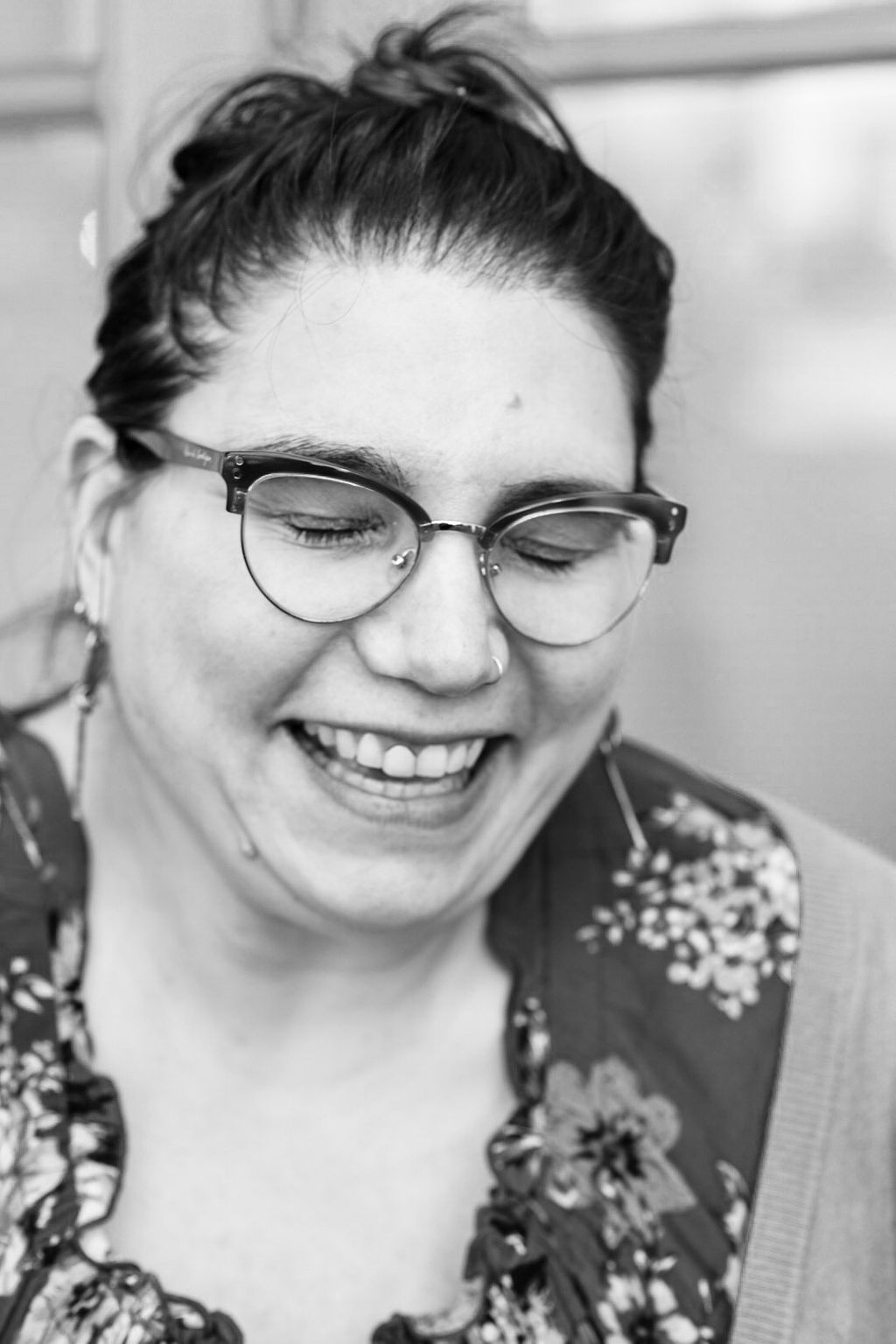
About the Interviewer: Jessi Knippel is an academic, writer, and artist who lives in the Pacific Northwest with her partner and children. She holds a BA in Theatre and Religious Studies, two Master of Arts degrees in the area of Religion and Art, and a Master of Arts in Religion and Gender Studies with a media concentration. Currently, she is researching her PhD dissertation at Claremont Graduate School. The focus of her dissertation is looking at English witch trials and anti-witchcraft codes and their ties to the slave codes and villainization of conjure and hoodoo in South Carolina and Barbados. Some of her other research work includes research on Post/Ex-Evangelicals, Evangelicalism in the US, New Religious Movements, Cults and NRM, syncretism and folk practices in religion, as well as pop culture and religion.
Watch the full conversation with Kimberly B. George on YouTube: https://youtu.be/1atn_jZ__qU